
For hosts
House Rules for Renters: How to Keep a Shared Home Calm
Short, specific house rules that apply to every tenant keep a shared home calm. Here is what to cover and how to share and update them.
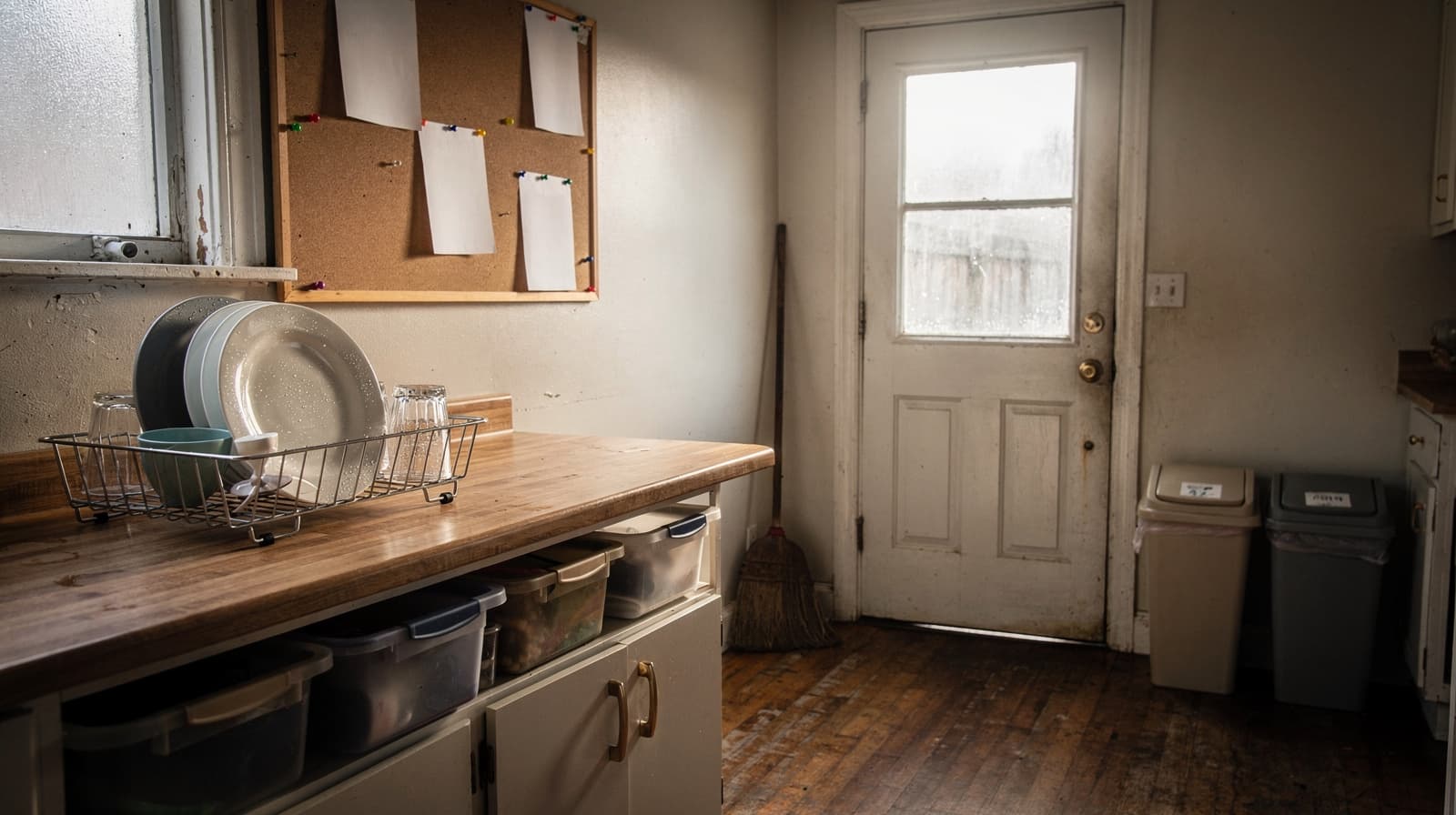
Good house rules for renters keep a shared home calm because everyone knows the deal before they move in. Keep them short, specific and the same for every tenant, cover the shared spaces where friction starts, and hand a written copy to each renter before move-in.
This post covers why rules matter more when you rent by the room, what a rule needs in order to hold up, which topics to cover, and how to share and update them. It explains general principles, not legal advice. For your own rules, check the law and talk to a Virginia attorney.
Why house rules for renters matter more in a shared home
When you lease a whole house, one household decides how the kitchen is run. When you rent by the room, several people who did not choose each other share a kitchen, bathrooms and living areas. Most problems in a shared home are small: dishes in the sink, a loud phone call at midnight, a guest who stays a week, a full trash can nobody takes out. Small problems repeated every day are what make good tenants leave.
Clear rules do three things for you as a host:
- They set expectations before anyone signs, so a renter can decide whether the house fits them.
- They give housemates a neutral reference point. "The rules say quiet hours start at 10" is easier to say than "you are too loud."
- They make it easier to treat every tenant the same way, which protects you and them.
On CoRent, every renter has verified their ID once with a government ID and a selfie match before they can apply, and you review each application in the app. House rules are the next layer: they shape how the people you approve live together.
What a rule needs in order to work
Virginia's landlord and tenant law has a section on landlord rules, § 55.1-1228 of the Code of Virginia. In plain terms, it says a rule is enforceable against a tenant only if it:
- Serves the tenants' convenience, safety or welfare, protects the property from abusive use, or fairly shares services and facilities.
- Is reasonably related to that purpose.
- Applies to all tenants in a fair manner.
- Is explicit enough that a tenant knows what to do or not do.
- Is not a way to avoid the landlord's own obligations.
- Was given to the tenant in writing when they signed or when the rule was adopted.
The section has more detail, including how rules adopted later apply. Read it in full, and if you are unsure whether a rule fits, ask an attorney. The useful habit it teaches: for every rule, you should be able to say what problem it solves and show that it applies to everyone.
The topics to cover
You do not need pages of rules. You need clear answers on the things housemates actually argue about.
- Kitchen. When dishes get washed, how fridge and pantry space is split, and what happens to food left past a week.
- Bathrooms. How shared bathrooms are kept clean and, if needed, how busy mornings are handled.
- Cleaning and chores. Who cleans the common areas and how often. A simple weekly rotation works better than "everyone pitches in."
- Trash and recycling. Which day the bins go out and who takes them.
- Quiet hours. A clear start and end time that applies to everyone.
- Guests. How long a guest can stay and how often before they count as an occupant. Set one limit for every tenant.
- Smoking and vaping. Where it is and is not allowed, inside and out.
- Parking. How spaces are shared, if there are any.
- Utilities. Whether utilities are included in rent or shared. On CoRent you can turn on shared utilities for a house, and each tenant pays their share of electricity, water, gas and internet in the app, on top of rent. Say which applies in your rules so nobody is surprised.
- Maintenance. How to report a repair. You run maintenance in the CoRent app, so tell tenants to report problems there rather than by text or in passing.
- Safety. Do not block exits or hallways, do not disable smoke alarms, and set limits on space heaters, candles and cooking left unattended. The U.S. Fire Administration has plain guidance on preventing home fires that you can borrow from.
Write rules that are fair and specific
Vague rules cause fights because each person reads them differently. "Be respectful" means something different to everyone. "Quiet hours are 10 p.m. to 7 a.m. every day" means one thing.
A few tests to run on each rule:
- Is it specific? Use times, days and numbers where you can.
- Does it apply to everyone? Write every rule about conduct, never about who a person is. Fair housing law applies to rooms in a shared home. The HUD Office of Fair Housing and Equal Opportunity explains the protected classes, and that the law also covers requests for reasonable accommodations. If a tenant asks for an exception related to a disability, take it seriously and get advice if you are unsure.
- Can you enforce it the same way every time? A rule you enforce for one tenant and ignore for another is worse than no rule.
- Is it about the shared home? Rules should govern shared spaces and safety, not a tenant's private life inside their own room.
Keep the whole document to one or two pages. If it runs longer, renters will not read it.
How to share and update your rules
Give every renter the same written copy before they move in, and keep a dated copy for yourself. Mention the key points (quiet hours, guests, utilities) in your listing's house details, so applicants know the deal before they apply.
When you change a rule, tell every tenant in writing at the same time, explain why, and give them notice before it takes effect. Then apply the new rule to everyone.
Rules work best alongside the rest of the house system. On CoRent, applications, rent, maintenance and messages all run in one app, so a tenant has one place to ask a question or report a problem. Our earlier post, how renting rooms in your house works on CoRent, walks through that system from listing to rent day.
You keep 95% of the rent on CoRent, with no booking fee and no management fee; the fees page has every detail. If you are ready to set up your house, create your free host account, or see what your house could earn on the host page.
Ready for the next step?
Create your free host accountMore on CoRent
Sources
List your rooms and keep 95% of the rent
CoRent charges one flat 5% platform fee on rent collected. No booking fee.