For hosts
House Hacking Renting Rooms: A Step-by-Step Guide
House hacking by renting rooms means living in your home while renting spare bedrooms by the room. Here is the whole process, from room prep to getting paid.
Key takeaways
- House hacking by renting rooms means living in your own home while renting individual furnished bedrooms to separate tenants who share common areas.
- CoRent hosts keep 95% of rent with no booking fees, making annual platform costs significantly lower than competing platforms like PadSplit.
- Every bedroom needs a keyed or keypad lock for privacy, and you should bundle shared utilities into the weekly room rate to avoid bill-chasing.
- Screen renters by verifying income directly, calling previous landlords, and holding every applicant to the same written criteria to avoid disputes.
- Renting by the room typically produces more gross rent than a whole-house lease and isolates vacancy so one turnover only cuts a fraction of your income.
House hacking renting rooms means living in your own home while renting spare bedrooms by the room, so your roommates' rent covers most or all of your housing cost. This walkthrough covers the whole process for an owner-occupant: preparing furnished private rooms, listing on CoRent where you keep 95% of rent with no booking fees, setting house rules, screening renters, and getting paid.
What does house hacking by renting rooms actually mean?
House hacking by renting rooms means you live in your own single-family house and rent individual furnished private rooms to separate tenants, each on their own agreement. Instead of one lease covering the whole property, you collect rent per room, and your tenants share the kitchen, laundry, and common areas with you and each other. The math is the draw: renting by the room typically produces more gross rent than a whole-house lease, because each bedroom becomes its own income line. Owner-occupants also qualify for financing and tax treatment that absentee investors can't touch, which is why this is the classic first move for small landlords. Before you count bedrooms, check your local occupancy rules, since cities cap how many unrelated people can share one dwelling under their housing codes; federal fair housing guidance from HUD sets the baseline for how you may advertise and select tenants.
On CoRent, you can see how a by-the-room setup is structured on a live listing, like Colonial Heights - House — Rooms for Rent, before you commit to converting your own.
How many rooms can I rent out in my own house?
The practical ceiling is your bedroom count minus one: in a 4-bedroom house, you can rent by the room in three of them and keep one for yourself. Legal limits are usually lower. Many cities cap unrelated occupants per dwelling (often 3-4 under occupancy codes), and some zoning rules treat a house with 3+ unrelated renters as a boarding house, which triggers extra requirements.
Check local occupancy rules before you count bedrooms
Before listing anything, verify three things: your city's occupancy code, your HOA covenants (many ban rentals shorter than 6-12 months), and your mortgage terms if you have a live-in landlord clause. A quick call to your local code enforcement office costs nothing and prevents a forced room turn later.
How many rooms a live-in host can handle
Self-managing three rooms means screening three renters, tracking one weekly payment each, and handling shared utilities and room turns yourself. Most live-in hosts run 2-3 rooms comfortably. If you're modeling net operating income per room across several properties, the host breakdowns on Host Blog: Renting Rooms in Shared Homes | CoRent.AI show how dollars per room scale before you commit to a configuration.
How do I prepare rooms for rent by the room?
Room-by-room prep comes down to three things: privacy, furniture, and shared spaces that survive multiple tenants.
Locks and privacy first
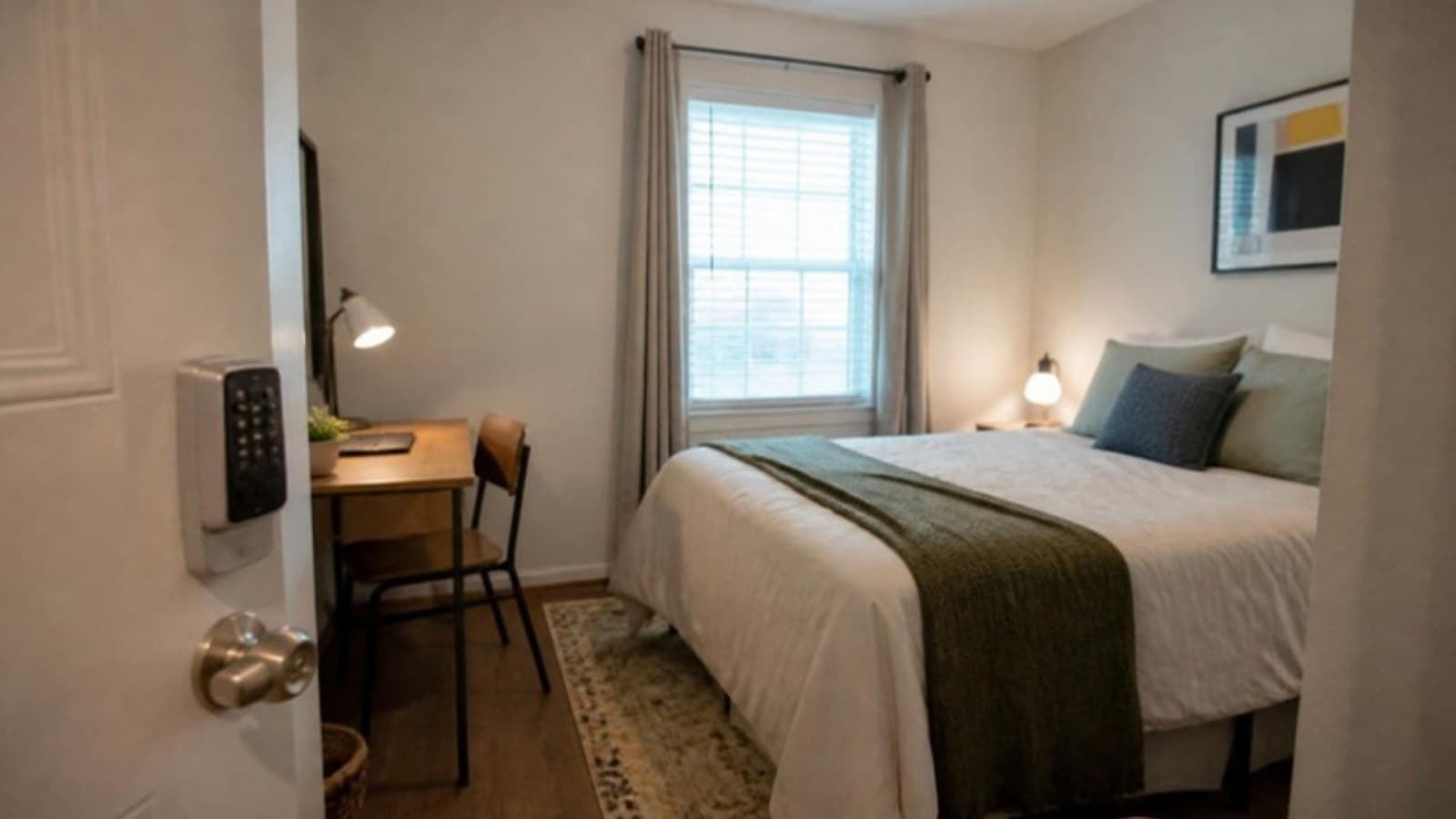
Every bedroom needs a keyed or keypad lock that only that renter controls. A solid-core door with a deadbolt rated to ANSI standards is the baseline; hollow doors and chain locks read as cheap and turn over faster. Add window coverings that actually block light, since shift workers are common in room rentals.
What to furnish, what to leave out
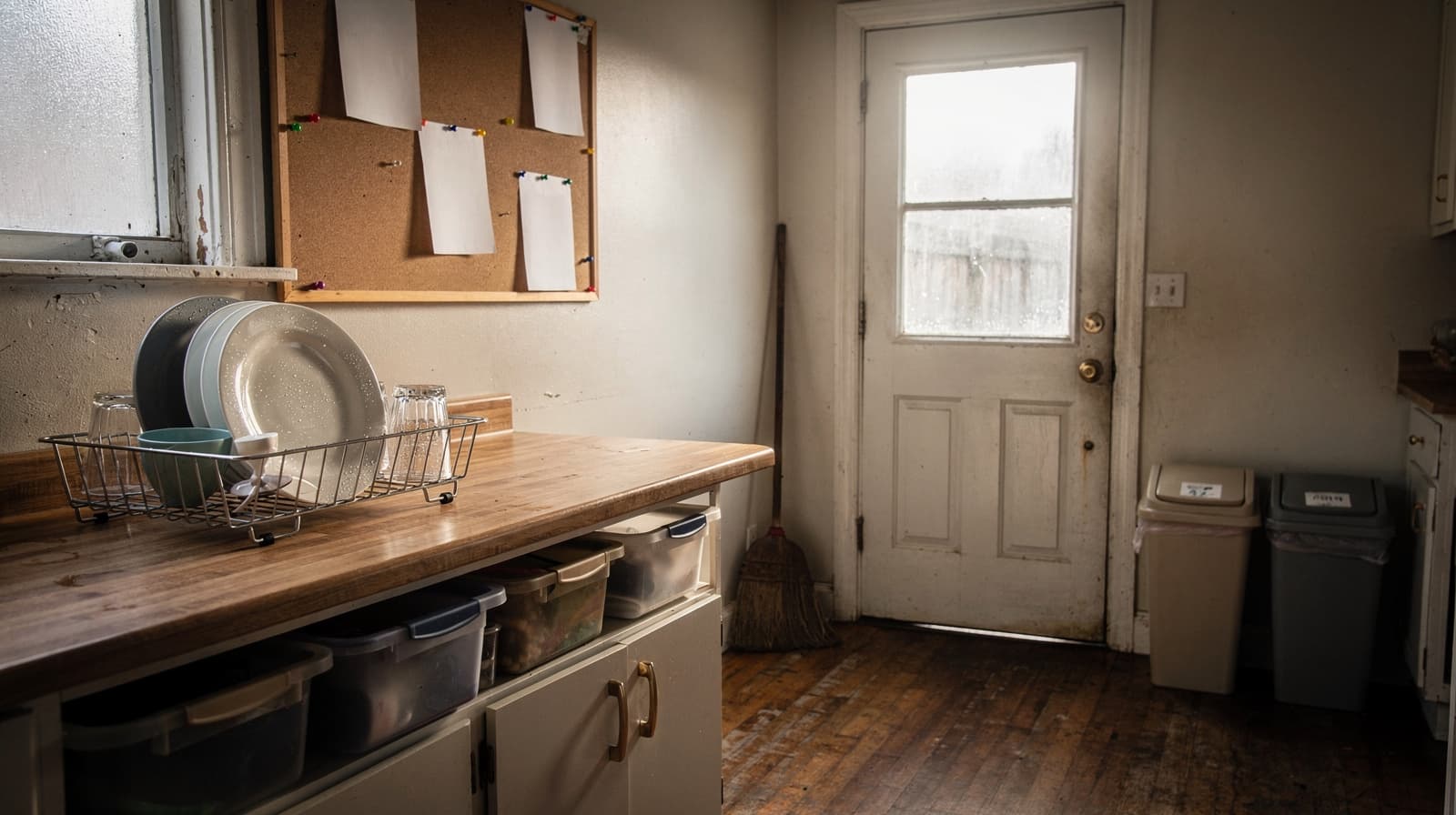
A furnished private room should include a bed, dresser, desk, and closet space, plus a working smoke detector. Leave out personal storage, fragile decor, and anything you would hate to replace after a room turn. Keep common areas minimal and durable: a couch, a dining table, and shared kitchen basics.
Utilities should be bundled into the weekly or monthly room rate so you are not splitting bills three ways. PadSplit hosts pay an 8% monthly platform fee plus the first 10 days of every new booking as a lease-up fee, which is why minimizing move-ins per room per year matters to your net operating income (PadSplit host review). Model your own room's numbers before you buy furniture using Richmond - House — Rooms in Richmond, VA.
How do I list my spare rooms on CoRent step by step?
Create your host account
Sign up on the /hosts page and enter your property address. CoRent confirms the house, then you add rooms under it. The host-facing calculator at Room Rental Income Calculator: Rooms vs. a Whole-House Lease shows what each room nets before you commit to anything, so run your numbers first.
List each room separately
Every room gets its own listing: photos, square footage, furnished or not, and which shared spaces the renter uses. Listing rooms individually matters because renters search by room, not by house, and it lets you price the primary bedroom differently from the small back room. It also keeps vacancy isolated: if one room turns over, the other three keep paying. PadSplit hosts tracking dollars per room report the same dynamic, and the math works the same way whether you use PadSplit, Alcove, or CoRent.
Set rent and house rules in the listing
Set a weekly rent per room. Weekly pricing matches how room renters actually pay: one weekly payment, no chasing roommates for split utilities. Write your house rules into the listing itself: quiet hours, shared chore expectations, guest policy, and smoking. Renters self-select before they book, which saves you the awkward conversation after move-in. Publish, and CoRent handles booking and payment collection while you keep 95% of rent with no booking fees.
How much of the rent do I keep as a CoRent host?
CoRent hosts keep 95% of rent, with no booking fees and no mandatory property management fee. The Room Rental Income Calculator: Rooms vs. a Whole-House Lease shows the exact dollar figure per room before you list. That 5% platform cut is the whole fee structure, so your net operating income per room is predictable from day one.
Worked example: one room, one year
Say a furnished private room rents for $800/month and turns over once a year:
- Platform fee: CoRent 5% ($480/yr); PadSplit 8% monthly ($768/yr)
- Lease-up fee: CoRent $0; PadSplit first 10 days of every new booking (~$267 at one move-in)
- Annual platform cost: CoRent $480; PadSplit ~$1,035
PadSplit's own host reviewer describes the two charges plainly: "an 8% monthly platform fee" plus "the first 10 days of every new booking as a kind of lease-up fee" (beyondjustnumbers.com). More move-ins per room per year, the bigger that second fee grows.
Where PadSplit's fees come out of your rent
Both platforms deduct before payout, so the comparison is net-to-you, not sticker rent. Run your own rooms through the calculator to see the per-room gap against a whole-house lease.
How do I screen renters for rooms in my primary residence?
Screening matters more when you share a kitchen with the tenant than when you don't. Verify income directly: ask for two recent pay stubs or three months of bank statements, and confirm rent-by-the-room budgets work if the room costs 30% or less of their gross monthly income. Call the previous landlord yourself and ask one question: would you rent to them again?
Set trial expectations before move-in. Tell applicants the first 30 days go both ways, and that house rules on guests, noise, and shared utilities are enforced from day one. Someone who pushes back on rules during the application will push back after it.
Red flags for an owner-occupied house hack: vague employment, unwillingness to do a video call or meet in person, requests to pay deposits outside the platform, and stories that change between messages. One bad room turns every room into a problem, so hold every applicant to the same written criteria.
What house rules keep a house-hacked home livable?
When you live on site, house rules are your operating system. Write them down before the first showing: kitchen use (assigned shelf and fridge space, one shared shelf for condiments), quiet hours (typically 10pm to 6am on weeknights), overnight guest limits, and a chore rotation for common areas. Renters comparing furnished private rooms expect the rules up front, and vague expectations are what generate the friction you see in host reviews about support tickets and disputes.
Apply the rules to everyone identically. The Department of Housing and Urban Development's guidance on tenant screening and selection explains that consistent, documented criteria protect you from discrimination claims, and that applies to house rules as much as applications (HUD). One weekly payment covering rent and shared utilities removes bill-chasing, so make utility expectations part of the listing instead of a monthly argument.
Where the model falls short: rules can't replace a locked door between your space and renters' space, and you'll still handle noise complaints yourself, since there's no property manager to absorb them.
How does renting rooms compare to a whole-house lease for house hacking?
A whole-house lease pays one rent check with one tenant and one lease-up cycle per year. Rent by the room and you can gross more per month, but you take on more room turns, more screening, and shared utilities you manage yourself.
Vacancy works differently too. A single vacant house means zero income; with five rooms, one turnover only cuts your gross by a fifth while the other four keep paying.
Management is the real tradeoff. Room-by-room means more move-ins, more questions, and more rule enforcement, which is why platforms charge for it. PadSplit takes an 8% monthly platform fee plus the first 10 days of every new booking as a lease-up fee. CoRent.AI charges no booking fees and no mandatory property management fee, so hosts keep 95% of rent, and renters save roughly $1,290/mo versus renting a whole place.
Run your own numbers with the host calculator on CoRent before committing either way.
FAQ
Is house hacking renting rooms legal in my city?
Often yes, but local rules decide. Many cities cap how many unrelated occupants can share one dwelling, sometimes at 3 or 4 people. Some zoning codes treat a house with 3 or more unrelated renters as a boarding house. Check your occupancy code, HOA covenants, and mortgage terms before listing.
How much can I make renting rooms in my house?
It depends on your bedroom count and local rents. Renting by the room typically produces more gross rent than a single whole-house lease because each bedroom becomes its own income line. As a rough anchor, a furnished room at $800 per month nets $760 on CoRent after the 5% platform cut.
Do I have to live in the house to house hack with room rentals?
This guide covers owner-occupants, and living on site is the classic setup because owner-occupant financing and tax treatment beat what absentee investors get. Converting a property you do not occupy means you lose live-in advantages and take on remote management of locks, room turns, and rule enforcement yourself.
Does CoRent charge hosts a booking fee?
No. CoRent hosts keep 95% of rent, with no booking fees and no mandatory property management fee. The 5% platform cut is the entire fee structure. Compare that to PadSplit, which charges an 8% monthly fee plus the first 10 days of every new booking as a lease-up fee that grows with every move-in.
How fast do rooms rent out on CoRent?
No published average days-on-market exists, so treat any promise of instant bookings with skepticism. What speeds things up is within your control: furnished rooms with real locks, weekly pricing that matches how room renters pay, and house rules written into the listing so renters self-select before booking.
Ready for the next step?
Create your free host accountMore on CoRent
List your rooms and keep 95% of the rent
CoRent charges one flat 5% platform fee on rent collected. No booking fee.