For hosts
How to Furnish a Rental Bedroom Without Overspending
To furnish a rental bedroom without overspending, buy the essentials, choose sturdy plain pieces and check the payback before you shop. Here is a simple plan for hosts.
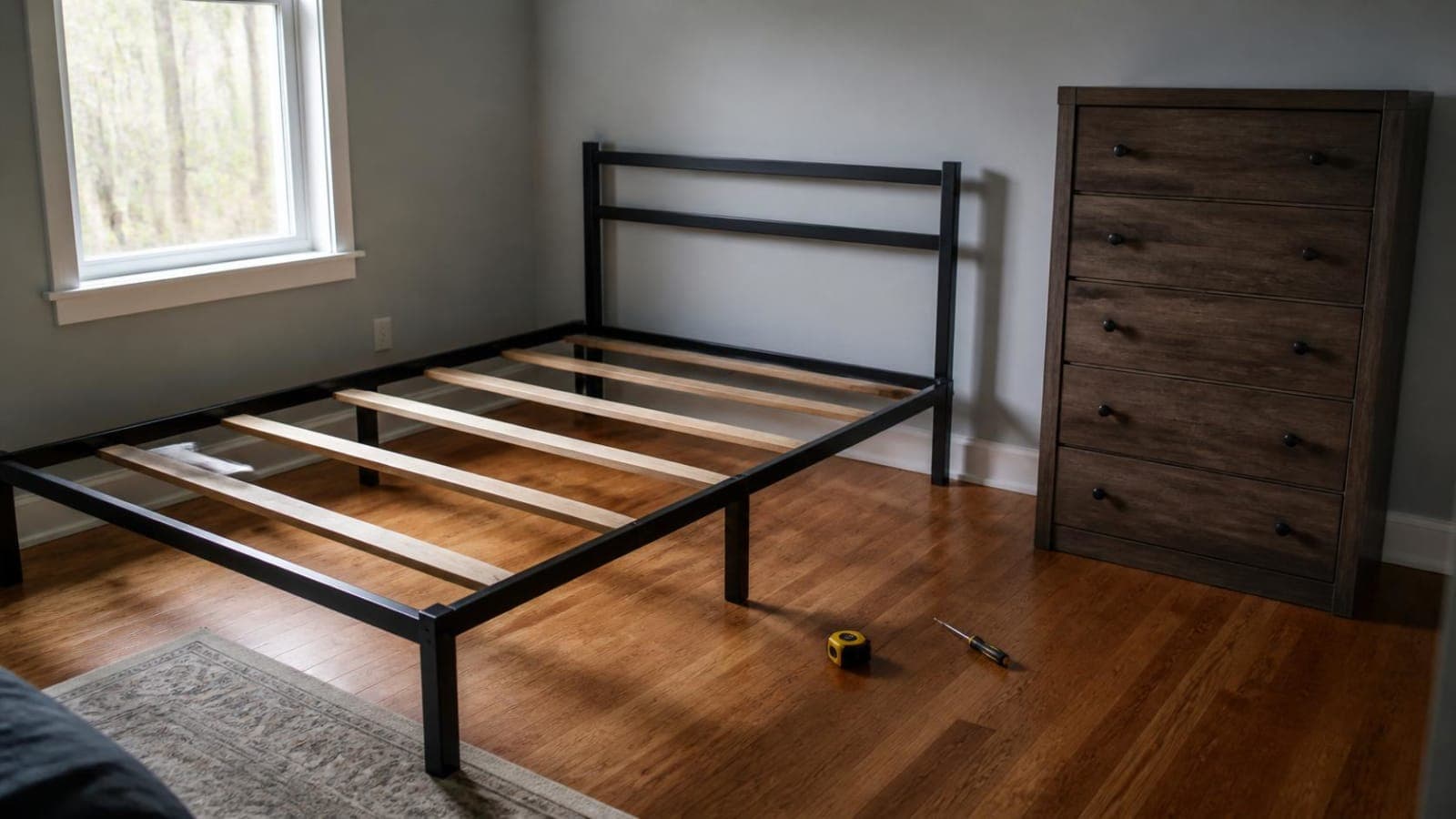
To furnish a rental bedroom without overspending, buy the short list of things a tenant needs every day, choose durable pieces over matching sets, and skip everything that only looks nice in photos. A bed, storage, a place to sit and work, and basic lighting cover most of what a tenant needs. Everything else can wait until you see how the room performs.
This is general information, not tax or legal advice. Ask a tax professional how furniture costs are treated on your return.
Key takeaways
- Start with a short must-have list, then add items only if tenants ask for them.
- Pick sturdy, plain pieces you can clean or replace one at a time.
- Set a budget for the whole room before you shop and track each purchase.
- State exactly what is included in your listing so there are no surprises.
- Furnishing is a cost you recover from rent, so compare the cost to your monthly rent before you buy.
What does a furnished room actually need?
Think about one ordinary day in the room: sleep, get dressed, store belongings, sit down, charge a phone and close the door. Each action points to an item.
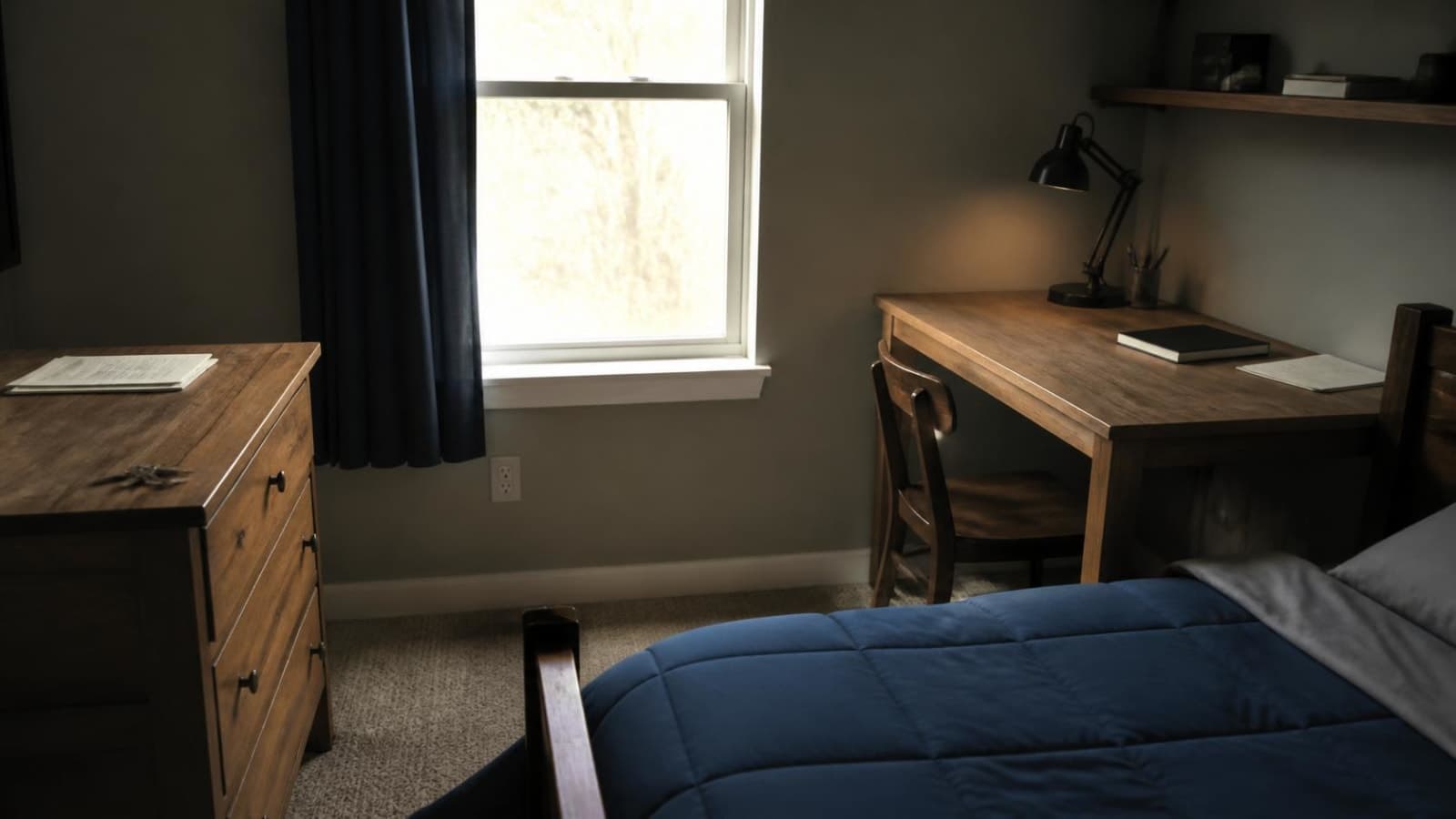
- A bed frame and mattress
- A mattress cover and a set of simple, washable bedding if you plan to provide it
- A dresser or other storage, plus hooks or a closet rod
- A desk or small table and a chair
- A lamp and working window coverings
- A lock on the bedroom door and a working smoke alarm
That list is the core. Our article on what a furnished room for rent includes shows how to describe it in a listing so tenants know what to expect.
How do you furnish a rental bedroom on a budget?
Spend on the items tenants use every night, and save on the rest.
- Mattress and bed: This is the item people notice most. A plain, firm mattress with a washable cover is easier to keep clean than a fancy one.
- Storage: Solid wood or metal pieces handle moves and scuffs better than thin particle board.
- Desk and chair: A simple table and a stable chair are enough. Skip anything with complicated parts.
- Decor: Leave the walls clean and neutral. A tenant can add their own touches.
- Used items: Secondhand furniture can work if it is sturdy and clean. Check for pests, wobbles and odors before you buy.
Buy in the same style where you can, so a damaged piece is easy to swap out. Keep the receipts and a list of what you own.
Should you furnish at all?
You do not have to. Some hosts rent unfurnished rooms, and some tenants want to bring their own bed. The choice depends on your house and your plan.
Furnishing can make a room easier to rent and easier to turn over, since a tenant can arrive with a suitcase. It also means you own the replacement cost. Our post on co-living operating costs breaks down the ongoing costs, including furnishing and turnover.
What does it cost, and when does it pay back? A worked example
This is an illustrative example with made-up numbers. Say you spend $900 to furnish a room, and the room rents for $650 a month.
- The 5% platform fee on $650 is $32.50, so you keep $617.50 each month.
- $900 divided by $617.50 is about 1.46 months of rent.
So in this example, the furniture is covered by about a month and a half of rent, if the room is rented and rent is paid. That ignores wear, repairs, vacancy and any extra rent a furnished room might bring in compared with an unfurnished one.
Now try the same room with a $450 furniture plan. $450 divided by $617.50 is about 0.73 months. The cheaper plan pays back faster, but it may mean a less comfortable room. Use your own numbers and decide what level of comfort makes sense for your rent.
For help setting the rent, see how to price a room for rent.
How do you keep the room in good shape?
Furniture lasts longer when you set it up for the next tenant, too.
- Use a mattress cover and wash it between tenants.
- Put felt pads under furniture legs to protect floors.
- Tighten screws and check for wobble at every turnover.
- Take dated photos of each piece at move-in and move-out.
Write the list of items into your move-in report. Our move-in checklist for landlords shows how to record the room's condition with the tenant.
What are the risks, and when does this not apply?
Furnishing carries some risks you should plan for.
- Safety: Check that furniture is stable and that no item blocks a window or door. Test smoke alarms. The NFPA smoke alarm page explains where alarms belong.
- Cost recovery: If the room sits empty, the furniture does not pay for itself.
- Taxes: How you treat furniture costs on your return depends on your situation. Ask a tax professional, and see the IRS page on rental income and expenses for the basics.
- Fair listing: Describe the room and what is in it. Do not describe who the room is for.
If your house is not a good fit for shared living, or if you plan to rent the room for only a short time, a full furniture set may not make sense.
FAQ
Do I have to furnish a room?
No. You can rent a room unfurnished or furnished. Say clearly which one in your listing. If you furnish it, list the main items so the tenant knows what they get and what they need to bring. Check your own agreement and the current law, and ask a Virginia attorney if you are unsure.
Is used furniture okay?
Yes, if it is clean, stable and free of pests. Check mattresses and upholstered pieces closely, and replace anything with damage or odors. A used dresser or desk is often a good way to save money. Check your own agreement and the current law, and ask a Virginia attorney if you are unsure.
Who owns the furniture if the tenant damages it?
The furniture is yours. Record its condition at move-in with photos and a written note. Virginia has rules for deposits and damage, so read the deposit law and ask an attorney before you take money out of a deposit. Check your own agreement and the current law, and ask a Virginia attorney if you are unsure.
How often should I replace furniture?
Replace an item when it is unsafe, dirty beyond cleaning or too worn to use. Check each piece at turnover and keep a short list of what needs work. There is no set schedule that fits every home. Check your own agreement and the current law, and ask a Virginia attorney if you are unsure.
Ready to list your furnished room?
Make your must-have list, spend where tenants feel it most and write the details into your listing. Hosts on CoRent list free and keep 95% of rent after the 5% platform fee on rent collected. Create your free host account to start, or read how fees work.
Ready for the next step?
Create your free host accountMore on CoRent
Sources
List your rooms and keep 95% of the rent
CoRent charges one flat 5% platform fee on rent collected. No booking fee.