For hosts
How to Price a Room for Rent in a Shared House
Learn how to price a room for rent by comparing your rooms to each other and to nearby listings. Rooms in the same house can have different prices, and here is why.
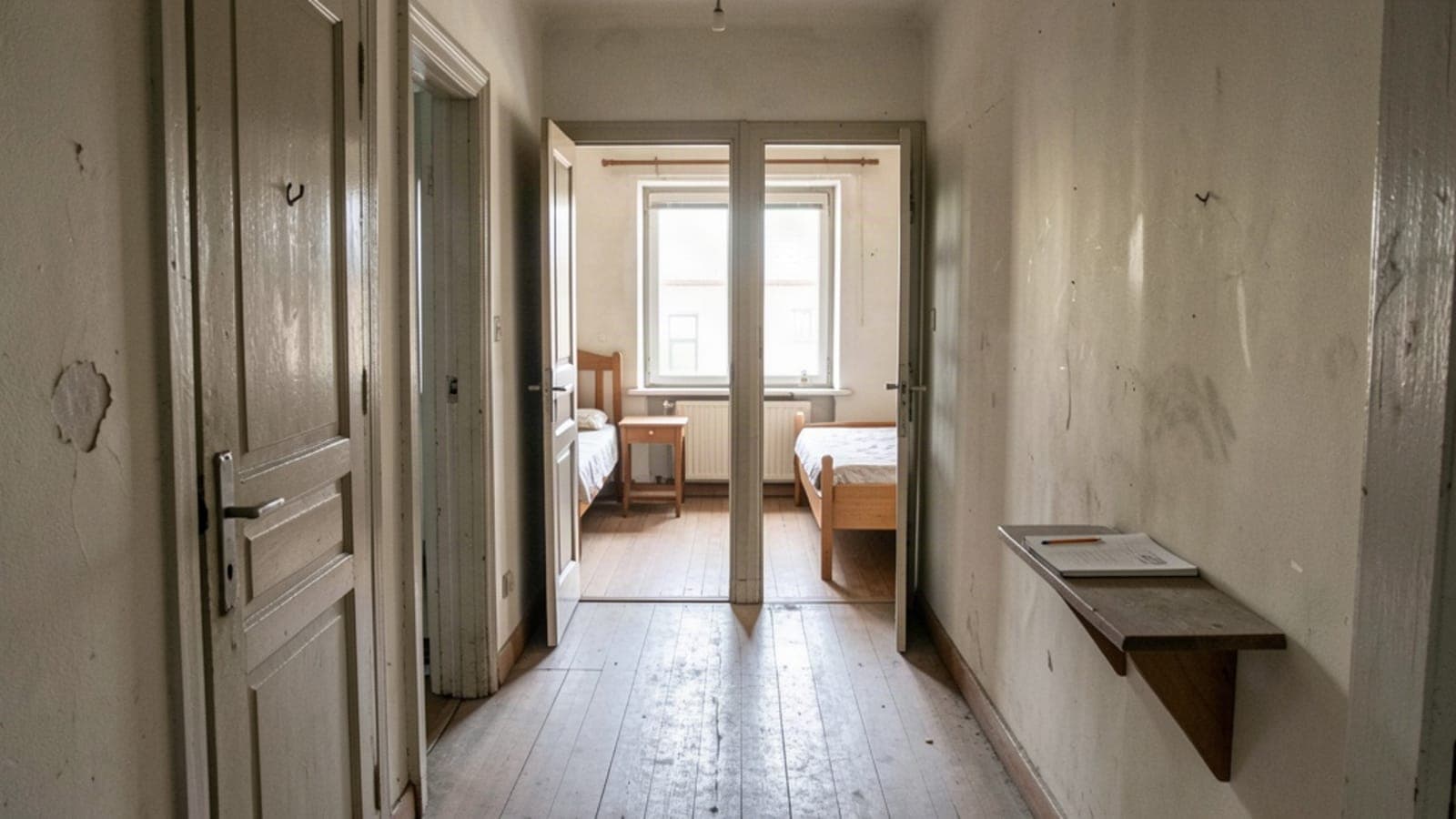
Here is how to price a room for rent: rank the rooms in your house against each other, check what similar rooms nearby are listed for, then start at a price you can defend and adjust. Rooms in the same house do not have to cost the same. A larger room with more light can be worth more than a small one, and your prices should follow the room, not the renter.
No post can tell you the exact number for your room. We do not publish price averages for rooms because we will not guess. This guide gives you a method you can use with your own listings and your own costs.
How to price a room for rent: start with the rooms themselves
Walk through the house and list every bedroom. Then compare them on the things a renter actually notices.
- Size and layout: can a bed, a desk and storage fit comfortably?
- Light and view: does it have a good window, and is it quiet?
- Bathroom access: private, shared with one person or shared with several?
- What is included: furniture, a mini fridge, a workspace, a closet.
- Location in the house: on the main floor, upstairs, near the kitchen or the front door.
Put the rooms in order, best to least good. This gives you your price ladder. The best room sits at the top, and the smallest or noisiest room sits at the bottom. Differences in price should have a plain reason that a renter can see by looking at the room.
Decide what the rent covers
Rooms on CoRent are rented furnished. Before you set a number, decide what rent includes. This matters a lot to the total a renter pays.
- Are utilities included in rent, or split between tenants? Hosts can let tenants share utilities, paid in the app on top of rent.
- Is internet included?
- Are there any shared supplies you provide, such as cleaning products?
Write it down in the listing. A lower rent with utilities split on top can cost a renter about the same as a higher rent with utilities included, so be clear about which you offer. For the cost side of running a shared house, read co-living operating costs: utilities, furnishing and turnover.
Check nearby listings
Look at what other rooms are listed for in your area. On CoRent you can browse rooms in Richmond and Petersburg. Compare like with like: a furnished room with a shared bath against a furnished room with a shared bath.
Public data can add background, though it is not a price for a room. The U.S. Census Bureau lists median gross rent for Petersburg city of $1,174 for 2020-2024 on its QuickFacts page. That figure describes rented housing units in a city, not single rooms, so use it as a sense of the local rent level rather than as a target.
Do the math with your own numbers
Start from what you need the house to cover, then see what each room's price does to your total. The platform fee on CoRent is 5% of rent collected, so you keep 95%, and there is no booking fee and no management fee. For a simple example, if a room is priced at $500 a month, the fee is $25 and you keep $475. That is an example only, and it is not a promise of what any room will earn.
Then subtract your own costs: utilities you cover, repairs, insurance, taxes, vacancy and time between tenants. The room rental income calculator guide shows how to compare room-by-room income with a whole-house lease, and the platform fees post explains the 5%. You can also see the fees page.
Remember that rent is income you may owe tax on. The IRS explains the basics in Topic no. 414, rental income and expenses. A tax professional can tell you how it applies to you.
Price in steps, then adjust
You do not have to find the perfect price on day one.
- Set your top room at a price you are comfortable defending.
- Step down for each room on your ladder, with a reason for each step.
- List all rooms with clear descriptions of what is included.
- Watch the response. Many applicants and quick interest can mean the price is low. Silence can mean the price, the photos or the description need work.
- Change one thing at a time, and give it a fair amount of time before changing again.
Weekly or monthly rent is a choice too. CoRent lets renters pay weekly or monthly, by card or bank account, so a renter may compare your room's weekly price with someone else's monthly price. State both clearly if you offer both.
Keep pricing fair
Set prices by the room, using the reasons on your ladder. Do not set different prices for the same room based on who the applicant is. Fair housing law applies to a room in a shared home. If you are unsure whether a pricing practice is allowed, ask a housing attorney.
Frequently asked questions
Should every room in the same house cost the same?
Not necessarily. Rooms differ in size, light, bathroom access and what is included. Price differences should come from those differences in the room.
How much does CoRent charge hosts?
Listing is free. The platform fee is 5% of rent collected, so you keep 95%. There is no booking fee and no management fee.
How often should I change the price?
Change it when you have a reason, such as little interest after a fair period or a change in what the room includes. Change one thing at a time so you can see what worked.
Rank your rooms, decide what rent covers, compare nearby listings and set a first price you can explain. Then list free and adjust as you learn. Create your free host account.
Ready for the next step?
Create your free host accountMore on CoRent
Sources
List your rooms and keep 95% of the rent
CoRent charges one flat 5% platform fee on rent collected. No booking fee.