For investors
House Hacking Taxes: Questions for Your CPA
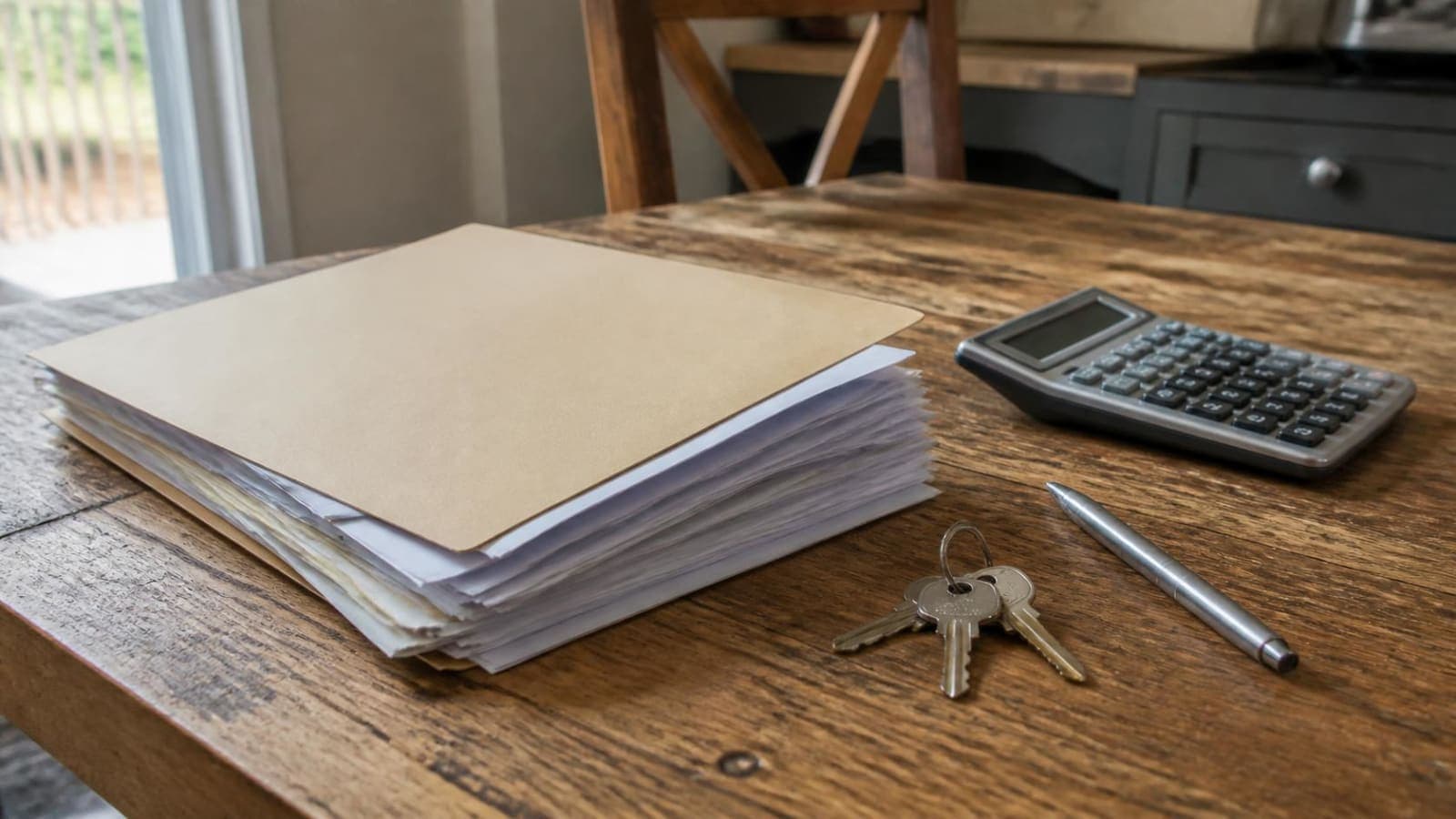
House hacking taxes depend on how you use the home and what records you keep. Here are the questions to bring to a CPA, the records to start now and an illustrative cost-split example.

House hacking taxes depend on how you use the home, how much rent you collect and what records you keep, so the safest move is to bring good questions to a CPA before you buy. This guide gives you a plain-language list of what to ask and what to track. It is general information. Nothing here is tax, legal or investment advice, and returns are not guaranteed.
Key takeaways
- Rent you collect from tenants is generally something to report. A CPA can tell you how it applies to you.
- Part of your home may be a rental and part may be your personal home. How you split costs matters.
- Good records beat good memory. Start tracking on day one.
- Depreciation is a topic to raise with your CPA early, because it can affect what happens when you sell.
- Bring a list of questions to the CPA, and bring your numbers.
How do house hacking taxes work in general?
When you rent a room or a unit, the rent is income. The IRS explains the basics on its page about rental income and expenses. Costs of running the rental may be deductible, and your CPA can tell you which ones apply.
House hacking adds a wrinkle. You live in the home too. That means part of the home is personal and part is rental. Costs like the mortgage, insurance, utilities and repairs may need to be divided between the two uses.
The IRS publishes detailed rules for residential rental property in Publication 527. It is long. Skim the headings, then bring your questions to a professional. For a rented room inside your own home, the details can be different than for a separate unit.
What should you ask your CPA?
Write these down before the meeting:
- How should I divide costs between my personal use and the rental part?
- Which expenses can I count for a rented room? For a rented unit?
- How does depreciation apply to my situation, and how does it affect a future sale?
- What records do you need from me, and in what format?
- Do I need to make estimated tax payments on rent income?
- Does it matter if I rent rooms to people who share my kitchen versus renting a separate unit?
- How would a change, such as moving out and keeping the home as a rental, change my taxes?
Do not guess at any of these. The answers depend on your facts, and the rules change.
What records should you keep?
Set up a simple system before the first tenant arrives. Keep:
- Every rent payment you receive, with dates.
- Receipts for repairs, supplies and furnishing.
- Utility bills, and a note of how you split them.
- Your mortgage, tax and insurance statements.
- Mileage or notes for trips to the property if you rent a separate place.
- A floor plan or note showing which space is rented and which is personal.
Our guide to rental property bookkeeping for a shared home walks through a simple monthly routine. A spreadsheet is enough to start. Reconcile it monthly so you are not rebuilding a year of records in April.
If you use CoRent, rent is paid in the app and tenants can share utilities, paid in the app on top of rent. Hosts keep 95% of rent, and the platform fee is 5% of rent collected. Keep your payout and fee records with the rest. See CoRent fees for how the fee works.
What does a simple example look like?
Here is an illustrative example. These are made-up numbers for learning, not tax results, and not a prediction.
Say your home has four bedrooms, and you rent two rooms at $650 each. You and your CPA agree that 40% of the home counts as the rental part, based on the rented rooms and a fair share of common space.
- Rent collected: 2 x $650 = $1,300 a month, or $15,600 a year if both stay full.
- Platform fee at 5%: $15,600 x 0.05 = $780.
- Say yearly home costs that you and your CPA decide to split are $12,000.
- Rental share at 40%: $12,000 x 0.40 = $4,800.
A CPA would then work out what counts, what does not and what the net result is. The point of the example is the process: collect income, track costs, divide by use. Your split may differ, and the rules may treat a room and a unit differently.
What is the risk of getting it wrong?
Mistakes usually come from missing records or from guessing. Common problems:
- No proof of rent. Cash and informal payments leave no trail.
- Mixed personal and rental spending. You cannot tell which costs belong where.
- Skipping depreciation questions. This can change a sale later, so ask early. Read the IRS Publication 946 overview, then ask your CPA.
- Assuming last year's rules. Tax rules change. Ask for the current year's answer.
Penalties and interest are real. A CPA fee is usually small compared with fixing a mistake.
When might this guide not apply?
It may not fit if you rent your home for only a few days a year, if you own through an entity, if you are not a U.S. taxpayer, or if your state has its own rules. It may also not fit if you have a complex income mix. In those cases, a CPA's advice matters even more.
This article does not cover your state or local taxes. Ask your CPA about both.
FAQ
Do I pay tax on rent from a roommate or tenant?
Rent is generally income that may need to be reported, though the details depend on your facts. The IRS explains rental income and expenses on its Topic 414 page. A CPA can tell you what applies to you, including whether any special rules fit renting a room inside your own home.
Can I deduct part of my mortgage and utilities?
Possibly, if part of the home is rented. Costs often need to be divided between personal and rental use. How you divide them matters, so ask your CPA to set a method before you start. Keep the receipts and the notes that explain your split.
Does depreciation matter for a house hack?
It can. Depreciation is a way rental property costs are recovered over time, and it can affect what happens when you sell. The IRS explains it in Publication 946. Ask your CPA early how it applies to the rented part of your home.
What records should I start with?
Start with rent received, repair and supply receipts, utility bills and your mortgage, tax and insurance statements. Add a note on which space is rented. A monthly spreadsheet is enough to begin with. Update it every month, and keep the receipts together in one folder. The habit matters more than the tool you pick.
Do I need an accountant?
You are not required to hire one, but a first meeting is often worth it. A CPA can tell you how rules apply to your house hack and what to track. Bring your questions, your estimates and your documents. Returns are not guaranteed, and this is not tax advice.
Want to see rent, fees and costs together first? Open the investor tools and test your own numbers.
Ready for the next step?
Run your numbers with the investor toolsMore on CoRent
Sources
Run the numbers on a rent-by-the-room property
Use the CoRent investor tools to compare room-by-room income with a single-family lease.