For renters
Moving Into a Furnished Room: What to Bring
Moving into a furnished room means bringing less. Confirm what is included, pack in three piles and document the room before you unpack. Includes a packing list and a worked budget.
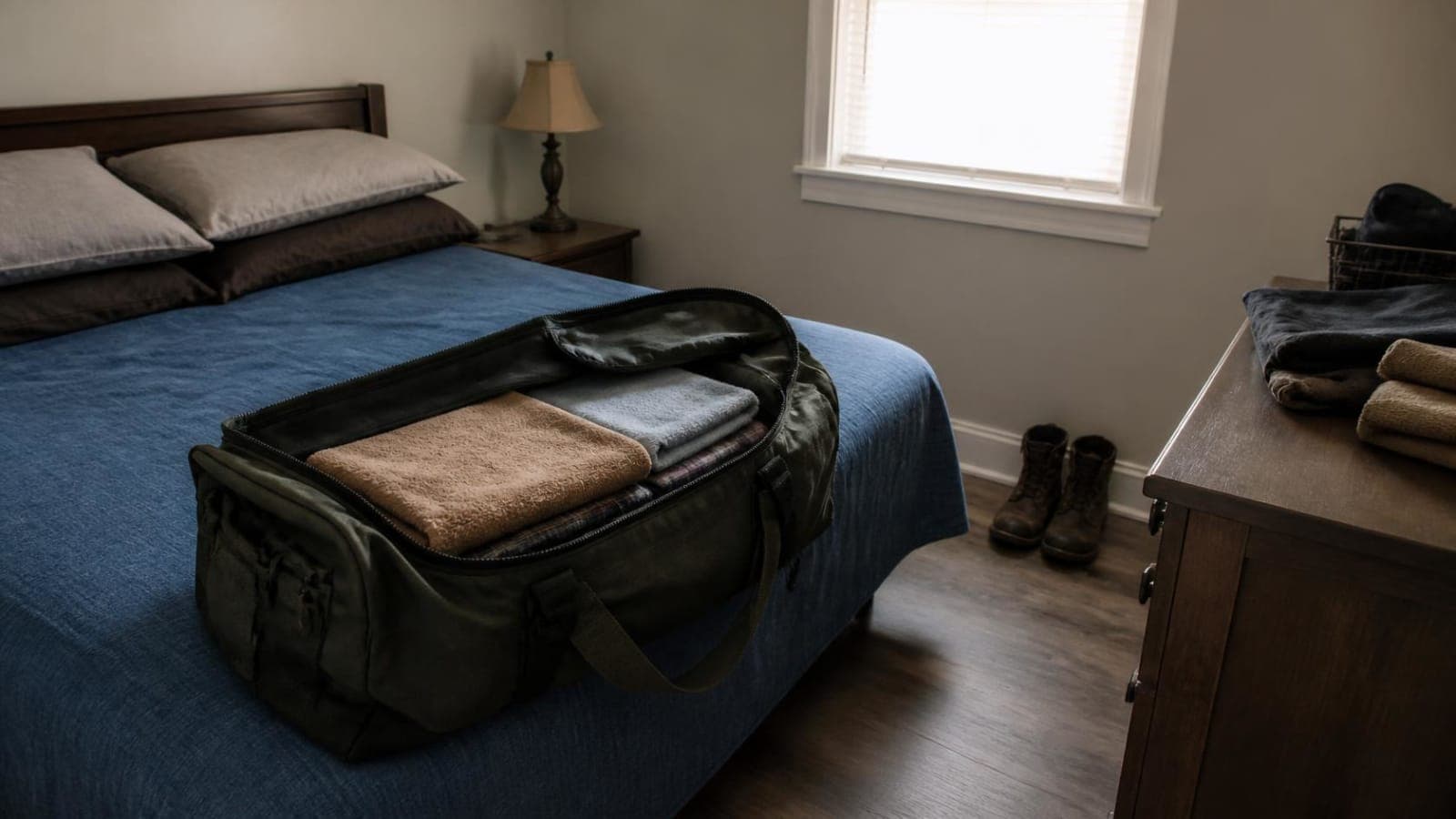
Moving into a furnished room means you can bring much less than you think: your clothes, bedding, documents, toiletries and a few personal items, once you confirm what the room already includes. Check the listing and ask your host for a written list before you pack. This guide helps you sort what to bring, what to leave and what to buy.
Key takeaways
- Confirm what is included before you pack. "Furnished" can mean different things in different houses.
- Bring bedding and towels unless the host says they are provided.
- Keep your important documents with you, not in a moving box.
- Pack in three piles: day one, week one and later.
- Photograph the room before you unpack, and keep the photos with your move-in report.
What does a furnished room usually include?
It varies. Many furnished rooms come with a bed, a dresser and a desk or a chair. Some include a lamp or a closet organizer. Some do not include a mattress cover or bedding at all.
Do not guess. Read the listing, then ask the host to confirm in writing. The guide on what is included in a furnished room lists the questions to ask.
Here is a short list to send:
- Is there a bed frame and mattress, and what size?
- Is there a desk, a chair and a dresser?
- Are sheets, blankets and towels provided?
- Is there a lamp or other lighting?
- Where can I store extra items?
- What do the kitchen and bathroom have for my use?
What should you pack first for moving into a furnished room?
Use three piles. This keeps you from digging through boxes on the first night.
Day one pile
- Phone charger and a power strip
- Bedding, a pillow and a towel
- Toiletries and any medicine you take
- A change of clothes and shoes
- Your keys, wallet and documents
Week one pile
- Most of your clothes and hangers
- Kitchen items you plan to use, such as a plate, a mug and a pan
- Cleaning supplies for your own space
- A small lock or storage box if the host allows it
Later pile
- Decor, books and extra gear
- Seasonal clothing
- Anything you are not sure will fit
Moving in is calmer when you do the first pile well and leave the rest for after you have seen the space.
What should you leave at home?
A furnished room has limited space. Leave behind anything that duplicates what the room has. A second dresser will not fit, and extra furniture can clash with house rules.
Also check the rules before you bring:
- Space heaters, hot plates or extension cords, which some houses do not allow
- Large appliances
- Anything that makes noise at night
- Anything that blocks a hallway or a shared area
Ask the host if you are unsure. House rules are part of living well in a shared home. The guide to house rules in a shared home explains what to expect.
A worked example: packing against a budget
These numbers are illustrative only. Say you need to buy a few items for the room, and you have $120 to spend.
- Bedding set: $40
- Two towels: $20
- Power strip: $15
- Hangers: $10
- Shower caddy and small trash can: $25
Total: $40 + $20 + $15 + $10 + $25 = $110. That leaves $10 of your $120.
The point is to price the list before you shop. If the host already provides bedding, you save that $40. Ask first, then buy.
If you want to see how this fits into a whole budget, read budget for renting a room.
How do you protect yourself on move-in day?
Before you unpack, document the room.
- Take dated photos of the walls, floor, furniture and closet.
- Photograph anything already damaged.
- Ask for a written move-in report and sign it.
- Keep a copy of the report and the photos together.
Virginia has a statute on move-in reports. Read Virginia Code 55.1-1214 so you know the timing. The move-in checklist for a shared room covers the full day.
Remember that on CoRent the street address is shared only after a booking is confirmed. Plan your route and your move time after you have it.
What about utilities and payments?
Utilities depend on the house. Some hosts include them in the rent. Others let tenants share utilities, which you pay in the app on top of rent. Ask how it works before you move in so your first bill is not a surprise.
Rent can be paid weekly or monthly, by card or bank account. A processing fee applies to each rent payment, and it is shown at checkout. The processing fee is waived when a full month is paid by bank account. See the fees page for details.
When this advice does not apply
This guide fits a furnished room in a shared home. If your room is unfurnished, you will need a bed and basic furniture, and the list changes a lot. If you have health needs that require specific equipment, talk to the host before move-in. Fair housing rules protect you, and the HUD fair housing page explains the basics.
If you are not sure what your agreement says about what you can bring or change in the room, ask before you do it. Do not drill into walls or move furniture out without permission.
Move-in day checklist
- Confirm the time and get the address from your booking.
- Bring your ID and a copy of your agreement.
- Pack the day-one pile in a bag you carry.
- Walk the room with the host and note any damage.
- Get keys and learn how the locks work.
- Ask where to put trash, recycling and shared items.
- Say hello to your housemates.
A short walk through the house on day one helps you learn the layout and the rules fast.
FAQ
Do I need to bring my own bedding?
Often yes, but it depends on the host. Some provide sheets and towels, and many do not. Ask for a written list of what is included before you pack, and do not assume the listing covers it.
Can I bring my own furniture into a furnished room?
Ask the host first. Space is limited and house rules may restrict what you can bring. Never remove the host's furniture without written permission. Agree on any changes in writing so nothing is disputed at move-out.
Is there a fee to apply for a room on CoRent?
No. Signing up is free and there is no application fee. A processing fee applies to each rent payment, and it is shown at checkout. See the fees page for how payments work.
What documents should I keep with me?
Keep your ID, a copy of your agreement, your booking confirmation and your move-in report. Keep them in a bag you carry, not in a box in the truck, so you have them if anything comes up.
Pack light, check the list and walk the room before you unpack. When you are ready, browse rooms for rent.
Ready for the next step?
Browse rooms for rentMore on CoRent
Sources
Find a private room in a shared home
Verify your ID once, apply in the app and pay rent weekly or monthly. No application fee.