For renters
Sharing a Bathroom With Roommates: A Simple Plan
Sharing a bathroom with roommates goes smoothly with a talk in week one, a cleaning rotation and clear rules for supplies and shower times. Here is a simple plan to copy.
Sharing a bathroom with roommates works when you agree on a schedule, a cleaning plan and a few simple rules before problems start. Most bathroom arguments come from unspoken expectations, not from bad people. This guide gives you a plan you can bring to a house meeting. It is general information, not legal advice.
Key takeaways
- Talk about the bathroom in your first week, before frustration builds.
- A rotating cleaning chart beats a "whoever notices" system.
- Keep personal items in a bin or a caddy so counters stay clear.
- Agree on shower timing at busy hours, and keep the fan running.
- Report leaks and mold to your host fast. Do not wait.
How do you start sharing a bathroom with roommates?
Start with a short talk, not a list of complaints. Ask everyone what they need. One person may shower at 6 a.m. Another may work nights. Learning that early lets you plan around it.
Cover four things:
- When each person usually uses the bathroom
- What each person needs for privacy
- How cleaning will work
- How you will raise problems
Write the answers down and share them in the house chat. The guide to living with roommates has more ideas for house talks.
Also read your agreement and the house rules. A host may already have rules about cleaning, supplies or quiet hours. The guide to house rules in a shared home explains the usual topics.
Who cleans what, and when?
A shared bathroom stays clean when the work is divided in plain terms. Here is a simple rotation.
- Weekly deep clean: toilet, sink, shower and floor. One person per week, rotating.
- Daily habits for everyone: wipe up water, hang towels, put the toilet seat down if your house agrees on it, and throw away hair from the drain.
- Supplies: agree who buys what, and how you split the cost.
Say there are three roommates. The deep clean rotates by week: Alex in week one, Sam in week two, Jordan in week three, then it repeats. Those names are made up for the example. Everyone cleans once every three weeks. Put the rotation on the fridge or in a shared note.
If someone cannot do their week, they swap with a housemate. Do not let it slide. A missed week turns into a missed month.
Virginia law includes rules about what tenants owe the home. Virginia Code 55.1-1227 covers tenant obligations such as keeping the dwelling clean and safe. Read the current text yourself, and check your agreement.
How do you split the cost of supplies?
Toilet paper, soap and cleaner add up. Pick one method and stick to it.
Here is an illustration with made-up numbers. Say supplies for the month cost $24 and three people share the bathroom.
- $24 divided by 3 = $8 per person
Options that work:
- One person buys and the others pay them back each month.
- Rotate who buys each trip.
- Everyone buys their own personal items and shares only cleaning supplies.
Keep a note of who bought what. An app is not needed. A shared note on a phone is enough.
If you are working on a whole budget, budget for renting a room shows where small shared costs fit.
What are the rules for shower times and noise?
You do not need a strict schedule. You need a pattern.
- Agree on a few busy windows, such as weekday mornings, and keep showers short then.
- Run the fan during and after a shower to cut moisture.
- Keep late-night noise low, including the fan if it is loud.
- Knock before you enter, and lock the door when you are inside.
If the house has quiet hours, follow them. If you are not sure, ask the host. Small courtesies prevent big fights.
Where do you keep your things?
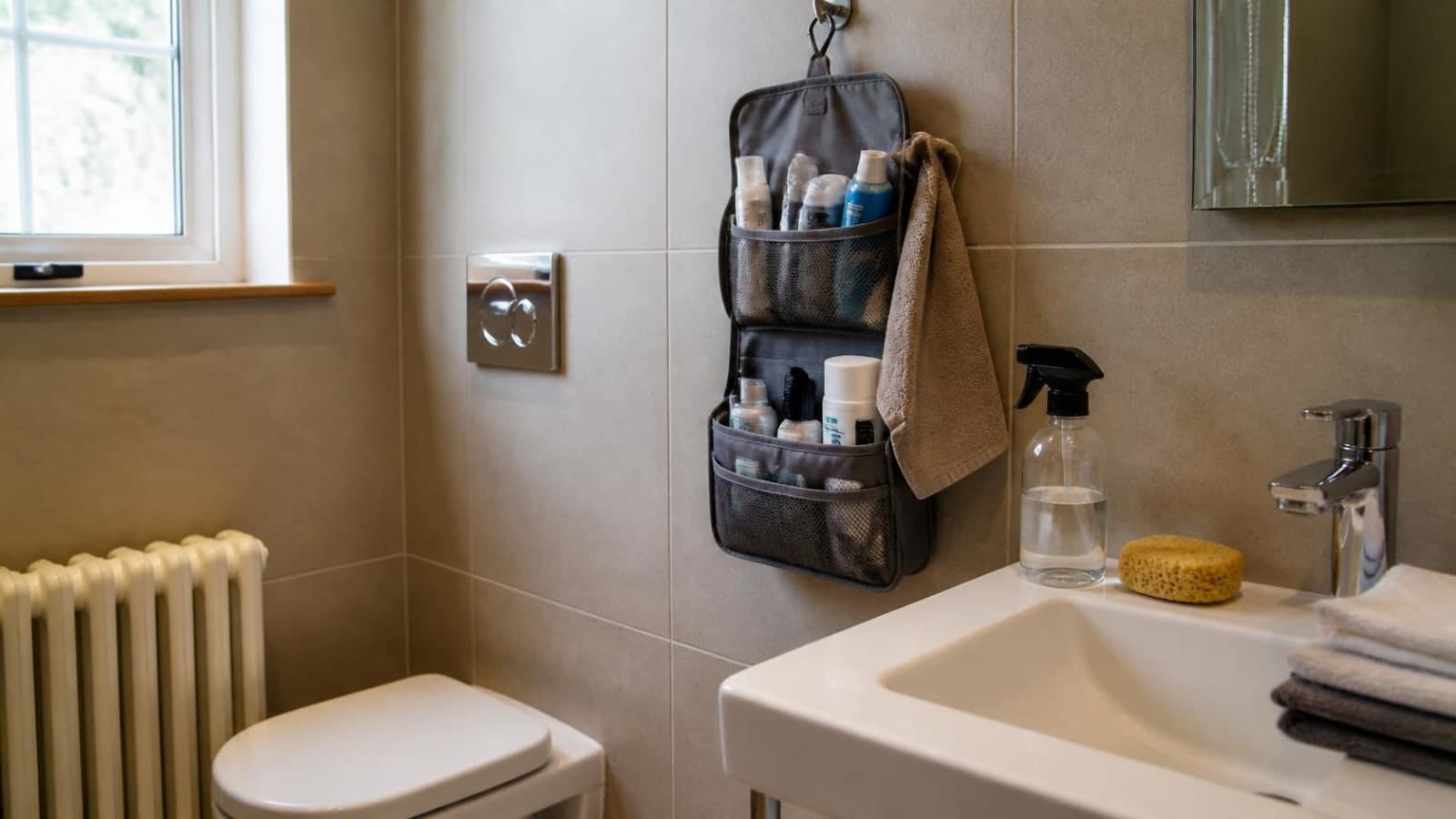
Counter space disappears fast. The easiest fix is a personal caddy or bin that goes with you.
- Keep toiletries in a caddy and take it back to your room.
- Hang your own towel on a hook, and label hooks if needed.
- Do not leave razors, medicine or other items on shared surfaces.
- Keep your valuables in your room.
A small caddy costs little and solves the most common complaint. This is also good for privacy and hygiene.
What if there is a leak, mold or a broken fixture?
Tell your host in writing as soon as you notice. Include photos and the date. Small leaks turn into big repairs, and mold grows in damp rooms.
Keep a copy of your message. If the problem is not fixed, read your agreement for the repair steps. For questions about tenant rights in Virginia, HUD's page on tenant rights is a good starting point, and Virginia Legal Aid lists free help.
Do not try big repairs yourself unless your host says so. Report, document and follow up.
When this advice does not apply
If you have a private bathroom, most of this does not matter. If you have a health or access need that affects how you use the bathroom, talk to your host. Fair housing rules protect you, and the HUD fair housing page explains the basics.
If a housemate is unsafe or harasses you, this guide is not the right tool. Contact your host, and if you are in danger, call local emergency services. Read renting a room: safety tips for a shared home for more.
What should you ask before you move in?
Before you book, ask the host these questions so you know what you are signing up for.
- How many people share each bathroom?
- Who supplies cleaning products and toilet paper?
- Is there a cleaning schedule or a rule about it?
- Is the fan or window working?
- How do I report a repair?
You can also use how to rent a room in Richmond, VA to compare rooms. On CoRent, rent can be paid weekly or monthly, by card or bank account. A processing fee applies to each rent payment, and it is shown at checkout. See the fees page for details.
FAQ
How many people can share one bathroom?
There is no single answer. It depends on the house, the schedules and the agreement. Ask the host how many people share each bathroom before you book, and think about your own daily routine to decide if it works.
How often should we clean a shared bathroom?
Most houses do a deep clean once a week, with everyone doing small daily habits. Pick a rotation that is fair and write it down. If the host has rules on cleaning, follow those first.
Who pays for toilet paper and soap?
It depends on the house. Some hosts provide supplies and some do not. Ask before you move in. If housemates buy supplies, split the monthly cost evenly and keep a simple note of who bought what.
What if a roommate will not clean?
Talk to them calmly, point to the agreed rotation and offer a swap if they are stuck. If it continues, tell your host. Keep messages polite and in writing. Do not escalate to anything threatening.
Agree on the plan early, keep it simple and fix problems fast. When you are ready, browse rooms for rent.